
Secret to Airline Efficiency and On-Time Performance
In the high-stakes world of commercial aviation, time is more than just a measurement—it is the ultimate currency. For airlines, the profitability of a multi-million dollar asset depends entirely on its movement. This brings us to a critical operational metric: Aircraft Turnaround Time (TAT).
Whether you are an industry professional or a frequent traveler, understanding the mechanics of the “turn” reveals how airlines maintain their schedules, manage costs, and ensure passenger safety.
What is Aircraft Turnaround Time?
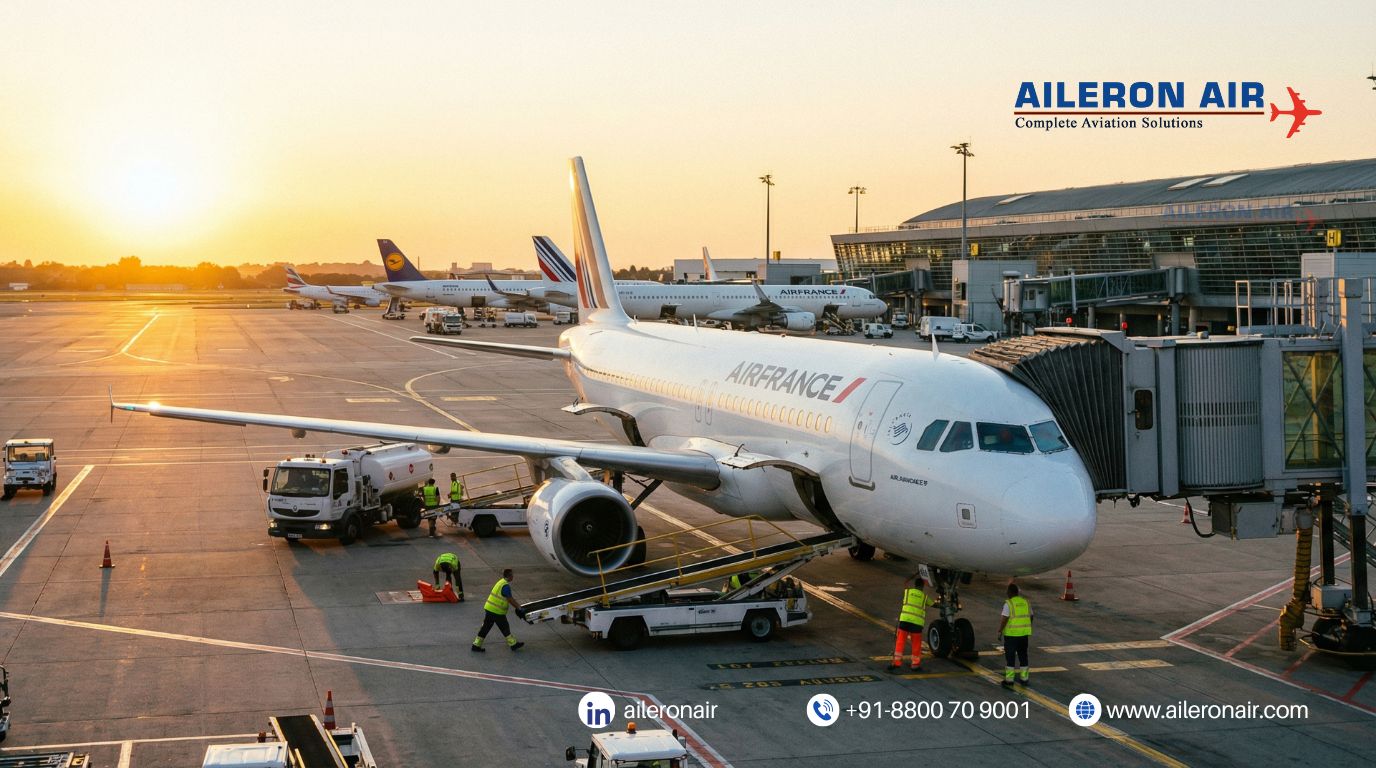
In technical terms, Aircraft Turnaround Time (TAT) is the duration between “chocks on” and “chocks off.” This interval begins the moment an aircraft arrives at the gate and the ground crew places wheel blocks (chocks) to secure it. It ends when those blocks are removed for the aircraft to depart for its next flight.
While the aircraft sits at the gate, it undergoes a complex sequence of ground handling activities. The efficiency of this process determines whether an airline can maximize its block time—the total time an aircraft is in operation from engine start to engine stop.
The "Critical Path": How the Turnaround Works
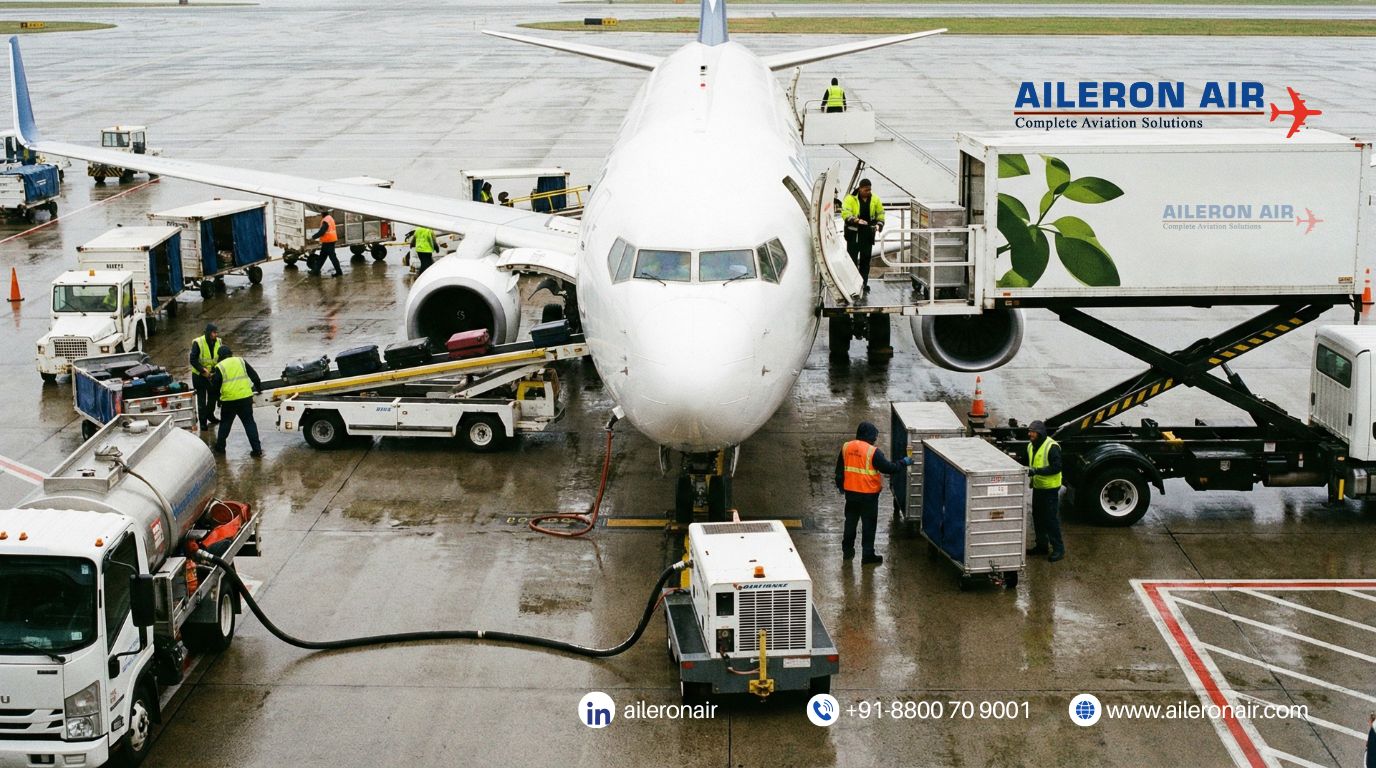
A successful turnaround is a choreographed dance involving hundreds of moving parts. To manage this, operational managers focus on the critical path. This refers to the sequence of essential tasks that, if delayed, will directly push back the departure time.
Deboarding and Disembarkation
The moment the cabin door opens, the clock starts. Swift deboarding is the first domino in the sequence. Any delay here, such as waiting for a jet bridge operator, creates a bottleneck for the cleaning and catering crews.
Parallel Ground Operations
To save time, airlines perform multiple tasks simultaneously:
- Refueling: Specialized tankers or hydrant systems pump thousands of pounds of jet fuel.
- Catering: Trucks lift to the galley doors to swap out depleted carts for fresh meals and beverages.
- Baggage Handling: Ground crews unload arriving luggage while pre-sorting outbound bags for the next leg.
Cleaning and Security Checks
Especially for Low-Cost Carriers (LCCs), rapid cabin tidying is essential. Security teams simultaneously perform mandatory sweeps to ensure the vessel is “clear” for the next group of passengers.
Boarding and Document Verification
Boarding is often the most unpredictable variable. Efficient gate agents must manage slot management constraints while ensuring all passengers are seated quickly to meet the “chocks off” deadline.
Why Turnaround Time Matters for On-Time Performance (OTP)
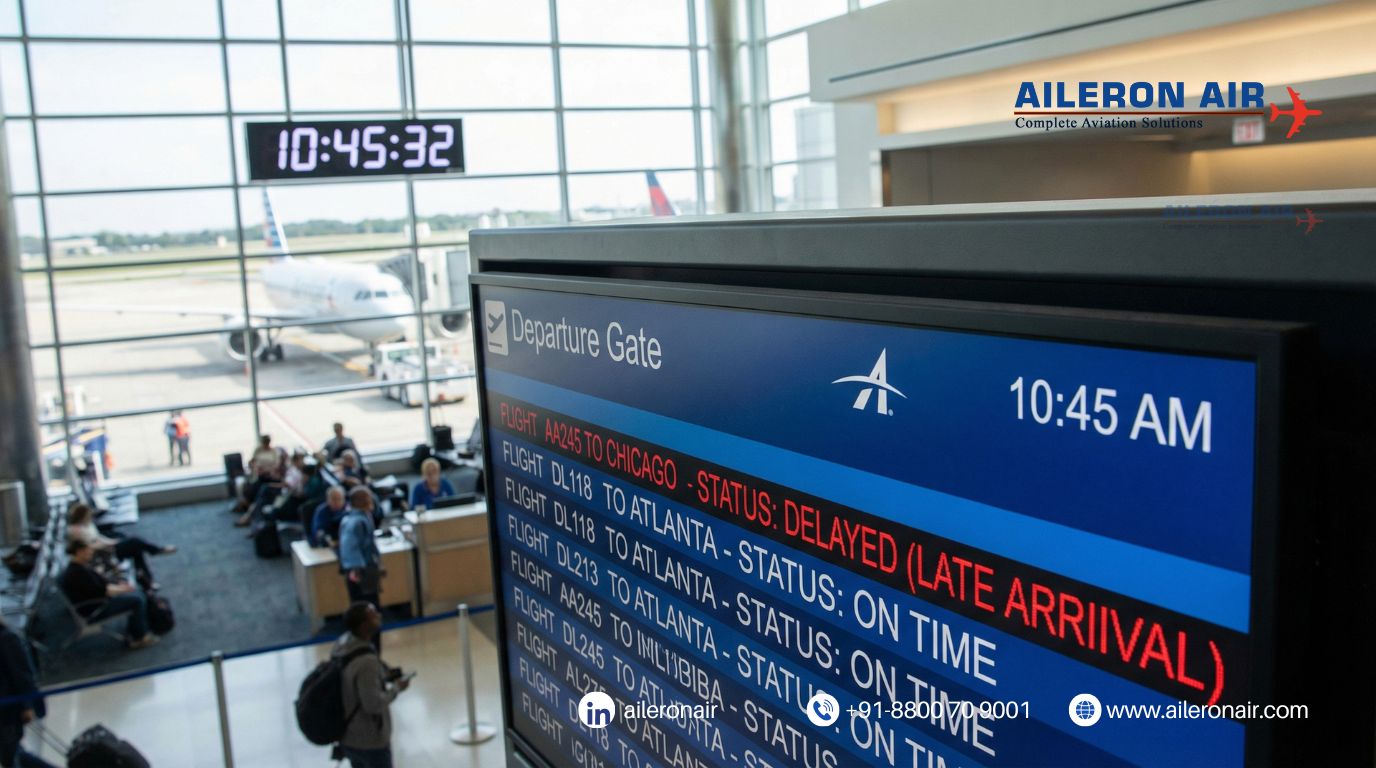
On-Time Performance (OTP) is the gold standard for airline reliability. If an airline consistently fails to meet its schedule, it faces hefty fines, loses airport slots, and suffers brand damage.
The Buffer Time Equation
Airlines build a “buffer” into their schedules to absorb minor delays. However, if the turnaround exceeds the allotted time, it eats through the buffer and spills into the next flight’s departure. This creates a knock-on effect, where one late morning flight causes a dozen delays across the network by evening.
Gate Utilization and Slot Management
At congested hubs like London Heathrow or JFK, every minute at the gate is expensive. Efficient turnarounds improve gate utilization, allowing more flights to use the same infrastructure. Furthermore, missing a departure “slot” can result in the aircraft being held on the tarmac for hours, devastating the day’s OTP.
The Financial Reality: "If It’s On the Ground, It’s Not Making Money"
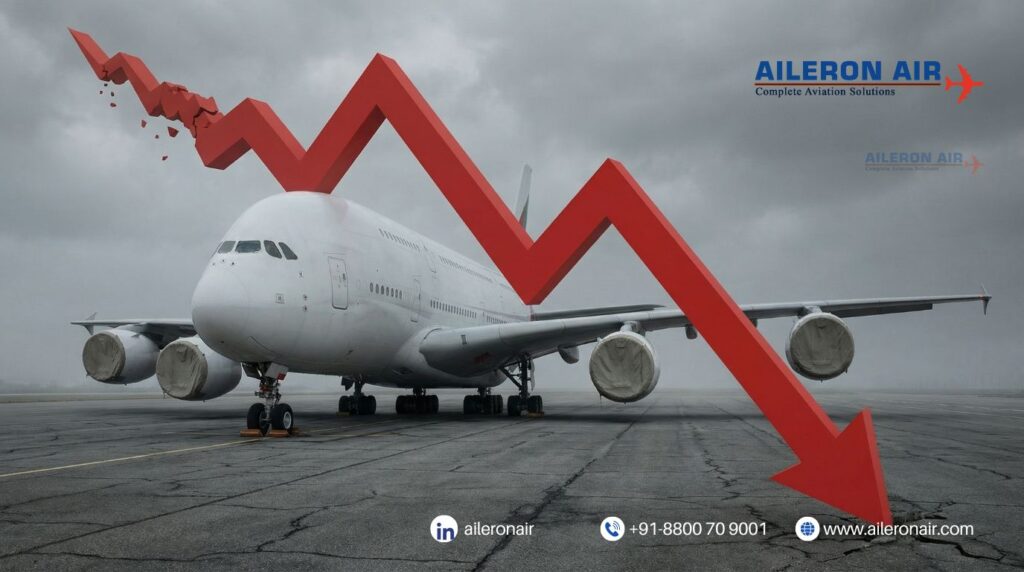
The aviation industry operates on razor-thin margins. An aircraft is a revenue-generating machine only when it is in the air.
- Fixed Costs: Leasing, insurance, and crew salaries are paid regardless of whether the plane is flying.
- Variable Costs: Efficient turns reduce the need for extra aircraft to cover the same number of routes.
- Maintenance and MEL: If a mechanical issue arises, the Minimum Equipment List (MEL) dictates whether the plane can fly. A fast turnaround provides a small window for engineers to address minor issues before they cause a grounded flight (AOG).
LCCs vs. Legacy Carriers: A Study in Contrasts
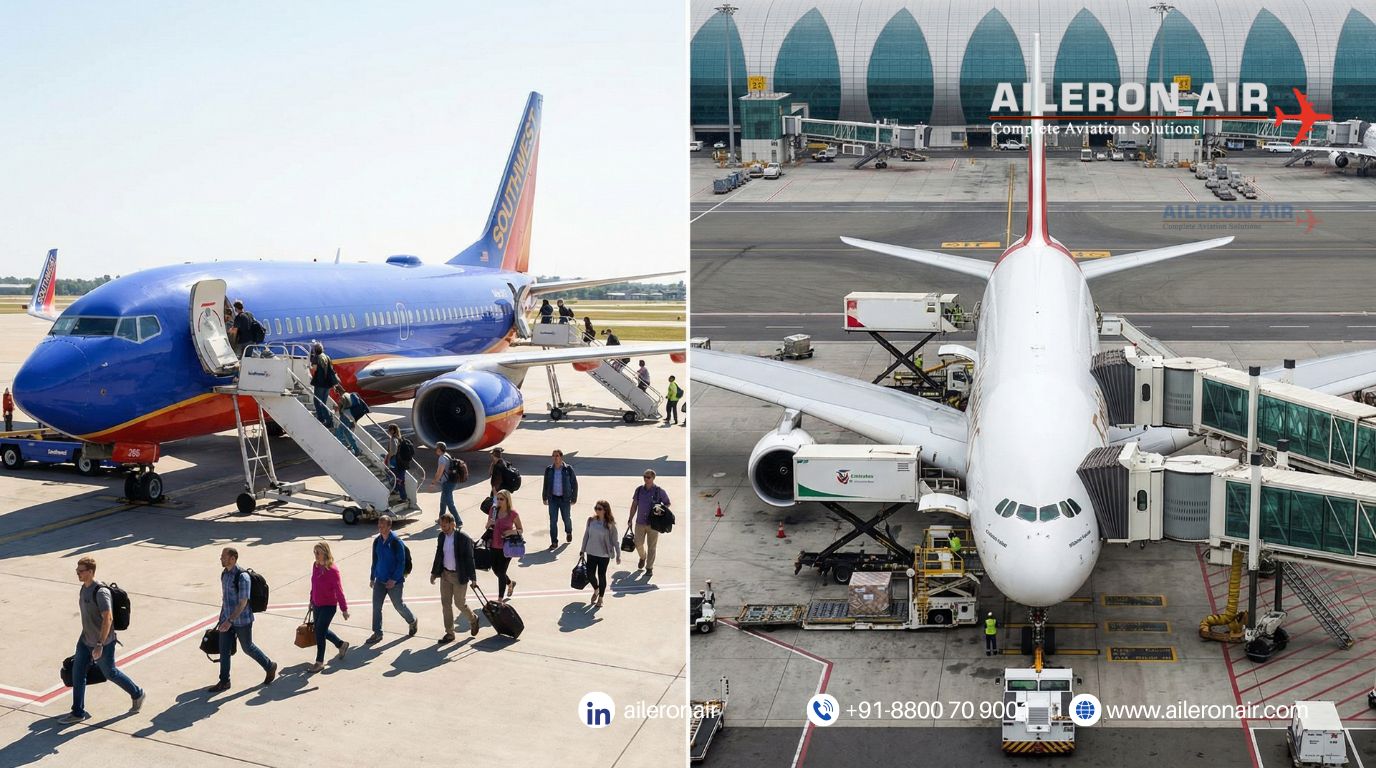
The Low-Cost Carrier (LCC) model (e.g., Ryanair, Southwest) pioneered the 25-minute turn. They achieve this by:
- Using secondary airports with less congestion.
- Operating a single aircraft type (like the Boeing 737) to standardize ground handling.
- Encouraging passengers to use stairs instead of jet bridges to double the boarding speed.
In contrast, Legacy Carriers (e.g., Emirates, Delta) dealing with long-haul widebody aircraft may have turnarounds lasting 90 to 180 minutes. The complexity of loading hundreds of meals and tons of cargo makes a “quick turn” much more difficult.
The Future of TAT: AI and IoT
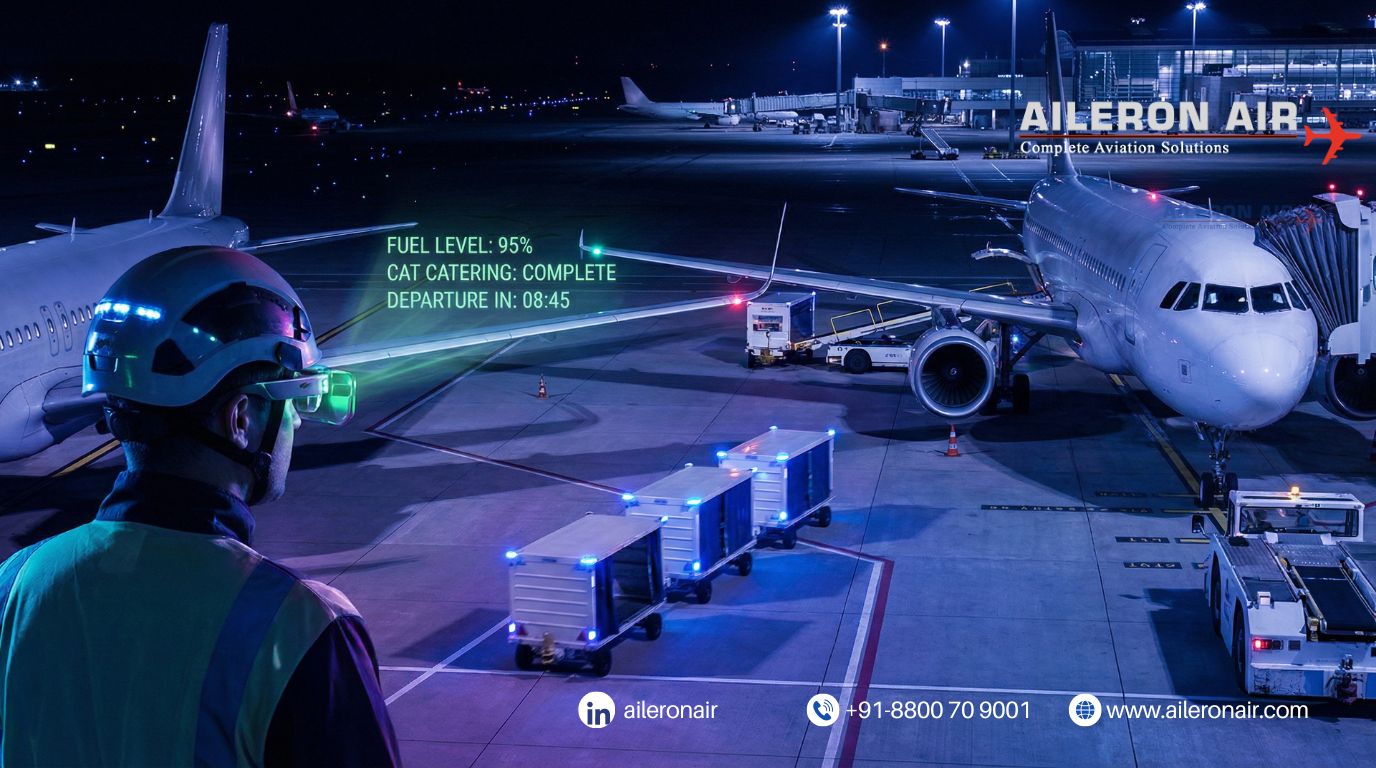
Innovation is transforming the tarmac. Airlines are now using:
- Computer Vision: AI cameras track ground handling in real-time, alerting managers if the fuel truck is late.
- IoT Sensors: Connected ground equipment provides data on “chocks on” status instantly.
- Predictive Analytics: Algorithms suggest the most efficient boarding sequences based on passenger behavior.
Key Takeaways
- TAT is the vital window between arrival (chocks on) and departure (chocks off).
- The critical path must be managed to prevent “knock-on” delays.
- Efficiency directly impacts On-Time Performance and the bottom line.
- Technology is the next frontier in shaving precious minutes off the ground stay.
Frequently Asked Questions (FAQ)
Q: How long is a standard aircraft turnaround?
A: It varies. A short-haul narrowbody flight typically takes 30–45 minutes, while a long-haul widebody can take 2 to 3 hours.
Q: What is the biggest cause of turnaround delays?
A: Late passenger arrival and slow baggage loading are the most common culprits, followed by technical maintenance issues.
Q: Does turnaround time affect safety?
A: Never. All turnarounds must adhere to strict FAA/EASA safety protocols. If a safety check takes longer, the flight is delayed regardless of the “target” time.


